Originally published in the University of Florida’s African Studies Quarterly: Volume 21, Issue 4, July 2023, pp. 84-85 https://asq.africa.ufl.edu/current-issue/
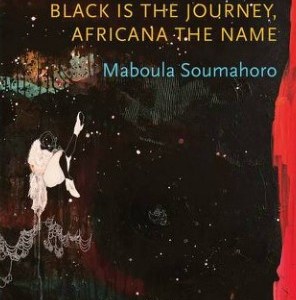
First published in France in 2020, Black is the Journey, Africana the Name is a scholarly examination of race, identity, and homeland. Professor Maboula Soumahoro asks what it means to be a Black African French woman, born in Paris to a mother from the Ivory Coast. She takes the reader on her journey from the French Hexagon (metropolitan France) to America and back, sharing her questions, thoughts, interactions, and realizations. The book is part-memoir, part-academic investigation, and wholly compelling.
Soumahoro begins with herself, “a daughter of the French Hexagon and Atlantic” (p. 1). Her active and creative mind is immediately on display as she examines the importance of language to identity: “French is my mother tongue though it is not my mother’s tongue” (p. 18). This is the first of many clever plays on words in her book and it is a pleasure to follow along with her as she thinks out loud and connects herself and her place within the African diaspora.
The translator, Kaiama L. Glover, has enjoyed a more than twenty years friendship with the author. Because Black is the Journey, Africana the Name is such an intimate and vulnerable exploration of identity, homeland, and return, it could not have been translated so effectively by a stranger. Glover’s translation captures Soumahoro’s passionate style perfectly. Soumahoro has an arresting way of writing; at once casual and conversational, then intellectual, asking probing and demanding questions. She is intense, fierce, emphatic, wryly funny, and playful at times. Black is the Journey, Africana the Name is a torrent of words, ideas, questions and answers, declarations, and indictments. This short book is not an easy read—passages challenge the reader to pause, re-read, and examine their reactions—but it is worth the time and effort to expand your perspective, empathy, and worldview.
The author describes the Triangle: Africa, Europe, and the Americas, and the impact of the European slave trade on generations of people. She comments that the trade left no records or archives, leaving the known narrative to the loudest or most dominant voices. So how does one explore this history? With perspective—the author had to leave France and live abroad in America for a decade to see it clearly.
Black is the Journey, Africana the Name dares to have a scholarly discussion about identity while focusing on the author herself. This is real and personal, but without a doubt, also highly relevant for millions of people across the globe. Asking “Who am I?” requires an examination of family, race, nationality, heritage, religion, and, of course, the boxes that the dominant culture forces upon us. Soumahoro’s path is her own, but we can glean insights from her, and ask ourselves some of the same questions.
When Soumahoro came to the US as an exchange student, “everything was upended…both personally and intellectually” (p. 42). She explains that her courses “amounted to a veritable feast. They inspired a real intellectual awakening, a genuine initiation” (p. 43). But imagine her shock at returning to France with the credits and thesis to receive her post-graduate degree, only to be accused of racism and told that her thesis would not be accepted because “…the notion of Black nationalism did not exist” (p. 43). She was dumbstruck. She explains that racism “…is rarely spoken of in France. Yet—and this is crucial—it is felt every time” (p. 47).
It took studying and living in the US for almost ten years for Soumahoro to realize that Paris and the Hexagon is her homeland, her place of return. “No one was more astonished than I,” she said, with deadpan humor (p. 53). She admits to this conscious choice, despite everything, including her heart’s pull toward America.
In her third and final chapter, “The Hexagon: An Ambiguous Adventure,” Soumahoro turns to French rap to expand on her thoughts. This reviewer recently attended a lecture on Eko Fresh, the German rapper. The role of rap and hip hop in pushing boundaries, and challenging convention and the status-quo cannot be ignored. Rappers take on issues like immigration, identity, and culture in a way that transcends any academic approach.
With Soumahoro’s decision to stay in France comes the typical racist reactions: anonymous letters telling her to either stay in her place or go back to where she came from; open doubts about her academic credentials. Nevertheless, she says, “I have decided to be Black,” (p. 98) and it is beautiful.

 bookthrasher
One thought on “Black is the Journey, Africana the Name”