In which tables are turned and to lose the case is to lose everything
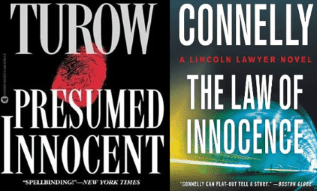
I couldn’t escape Jake Gyllenhaal’s face this summer, the ads for Presumed Innocent on Netflix were everywhere. But since Harrison Ford > Jake Gyllenhaal I decided to watch the 1990 movie instead. Alas, the library DVD froze midway through. It felt dated anyway, so then I went straight to the source: the 1987 page-turner by Scott Turow. This was his first novel, and he knocked it out of the park.
Scott Turow can write! His prose flows and his main character / narrator Rusty Sabich is a hopeless romantic prone to desperate ruminations. He’s also a shrewd county prosecutor accused of murdering a colleague, and the evidence, along with the fact that he had an affair with her, doesn’t look good.
I listened to the audiobook, narrated by Edward Herrmann who sounded like Harrison Ford to me. Rusty is a reflective man; he looks back and examines, and oh does he yearn and feel and ache. He feels so deeply, not only for his lover but also his wife and son. He’s selfish but he cares.
The scenes with Rusty and his defense attorney, Sandy Stern, are perfect: the pacing, their give and take, the things they reveal and hold back. Sandy’s a great character, larger than life in his own quietly unassuming way.
As per usual I didn’t guess the final twist but I didn’t care, either. I like to let myself be swept along, believing one thing then shifting as the story swerves. Presumed Innocent is an engrossing and intellectual ride and an epic courtroom drama.
*-*-*-*-*-*-*-*-*-*-*-*-*-*-*-*-*
Mickey Haller, aka the Lincoln Lawyer, catches the case of his life in The Law of Innocence by Michael Connelly. The defense attorney with a chip on his shoulder has been falsely accused of murder. Pulled over for a missing tag he ends up arrested after the officer finds a dead body in the trunk. Turns out it’s one of his former clients who owes him money. Oops.
Connelly’s prose is different than Turow’s, more methodical and spare, with feeling but never flowery. I listened to this one as well and the narrator, Peter Giles, captured Mickey’s rage and fear with a gravelly voice and indignant tone.
Mickey’s a good guy on good terms with both of his e-wives. Lorna still works for his practice and Maggie “McFierce” McPherson, a county prosecutor, ends up stepping in to be his co-counsel (of course Mickey is representing himself). Maggie McFierce is one of the best nicknames ever. Now that I think about it, Michael Connelly is great with nicknames, case in point, “Crate and Barrel” from the Bosch novels: two detectives, tall and stout, with the comedic timing of long-time partners.
It was good to see Mickey’s half-brother, Harry Bosch, involved in his defense. They have their opposing points of view – defense lawyer and homicide detective – but family always comes first.
Both books, published 33 years apart, are absolutely worth a read and offer elevated entertainment. They’re also a sobering reminder that in the US justice system you don’t get found innocent, you get found not guilty, and there is a difference.

 bookthrasher
One thought on “Not that innocent”