AI gone wild
I’m disappointed in The New York Times. Have you seen their list of the ‘100 Best Books of the 21st Century?’ They polled over 500 authors and book lovers for their 10 best picks and compiled them into a grand list. Only there’s a few glaring omissions including Andrew Pyper. It’s a travesty that not a single person chose one of his books for their list. For some reason, despite his past successes, awards and accolades, Pyper flies below the radar. Until now.
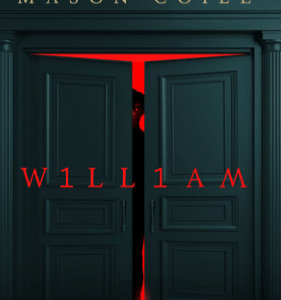
With William, the AI / sci-fi horror novel written under his new pseudonym, Mason Coile, he’s entered a new realm. The book is getting all the good reviews and buzz, it’s on all the lists and was even picked up for movie development. I feel vindicated, happy for him and you too, if you’re new to Planet Pyper.
William is diabolical, delicious, and supremely entertaining. It’s short and can easily be read in a day, which is a good thing because this is a book that demands a second reading. Why? Well, it starts out as one book but in the last few pages becomes another. I literally finished, sat grinning in shocked silence for a minute, then flipped to the first page to begin again with new eyes and a fresh perspective.
The story begins on Halloween morning. Henry wakes from a bad dream, his wife, Lily, sitting at his side. She urges him to tell her about it, probing, interjecting. She says something and Henry thinks “It’s a very Lily thing to say: superficially supportive, curious, passively superior.”
Poor Henry, from the start he’s clueless and earnest, striving to be the husband Lily deserves. As the story progresses we see a Lily who is cold and analytical, all ruthless girl-boss and too much of a genius to be interested in consequences.
Lily reminds Henry about the brunch they’re hosting for Paige and Davis, her former employees turned friends. He’s not thrilled. Henry’s an engineering wizard but he’s socially awkward, good at saying the wrong thing, unsure of how to act. He also has an anxiety disorder and can’t leave their smart home without feeling like he’s dying.
The tension and dread ramp up during brunch and Henry impulsively decides to show them the project he’s been working on in the attic. It’s William, an AI robot like no other. Physically, it’s rudimentary and a little grotesque. William has a cobbled-together face and torso with arms and fingers but no legs. Lily and the guests don’t dwell on its appearance, though, they’re instantly amazed with William’s intelligence and abilities; Henry’s created something truly remarkable. But things quickly and disturbingly go sideways. Interesting things happen when AI turns inward.
I fell for Andrew Pyper when I read his first book, Lost Girls. I don’t remember all the details, but what I do recall is classic Pyper: haunted houses, ghosts, the thin line between mental health and madness. I recommended his book, The Killing Circle to a friend who does not scare easily and she said it was one of the most terrifying books she’s ever read. His writing is distinct: dignified, observant, clever, understated, precise.
William gets all the best lines (and sounds like a serial killer) –
All those moral evaluations. they’re handcuffs. You could be free of them like that – he clicks his fingers – if you choose to be, brother.
William is a masterfully crafted, 213 page triumph of true horror, with jump scares, gore, haunted (smart) houses, villains that won’t die, possession and deception. It’s creepy and frightening and it all takes place on Halloween day and night, serving sublime treats from William’s demented magic bag of tricks.
This and That
When you’re wary of someone and they say “Don’t worry. I’ll be sweet as pie, I’ll be an angel,” trust your gut and RUN.
Posted three years ago The Residence https://bookthrasher.com/2021/10/28/the-residence/
Perhaps a quick review of Asimov’s Three Laws of Robotics is in order:
1) A robot may not injure a human being or, through inaction, allow a human being to come to harm.
2) A robot must obey the orders given it by human beings except where such orders would conflict with the First Law.
3) A robot must protect its own existence as long as such protection does not conflict with the First or Second Law.
Here’s gift links to the NYT lists:
Readers 100 Best Books https://www.nytimes.com/interactive/2024/books/reader-best-books-21st-century.html?unlocked_article_code=1.VU4.Bi_7.GjVlvDm-XonD&smid=url-share

 bookthrasher
3 thoughts on “W1LL1AM”